
Do you React or Respond as a Parent and Why It Matters
Jan 11, 2026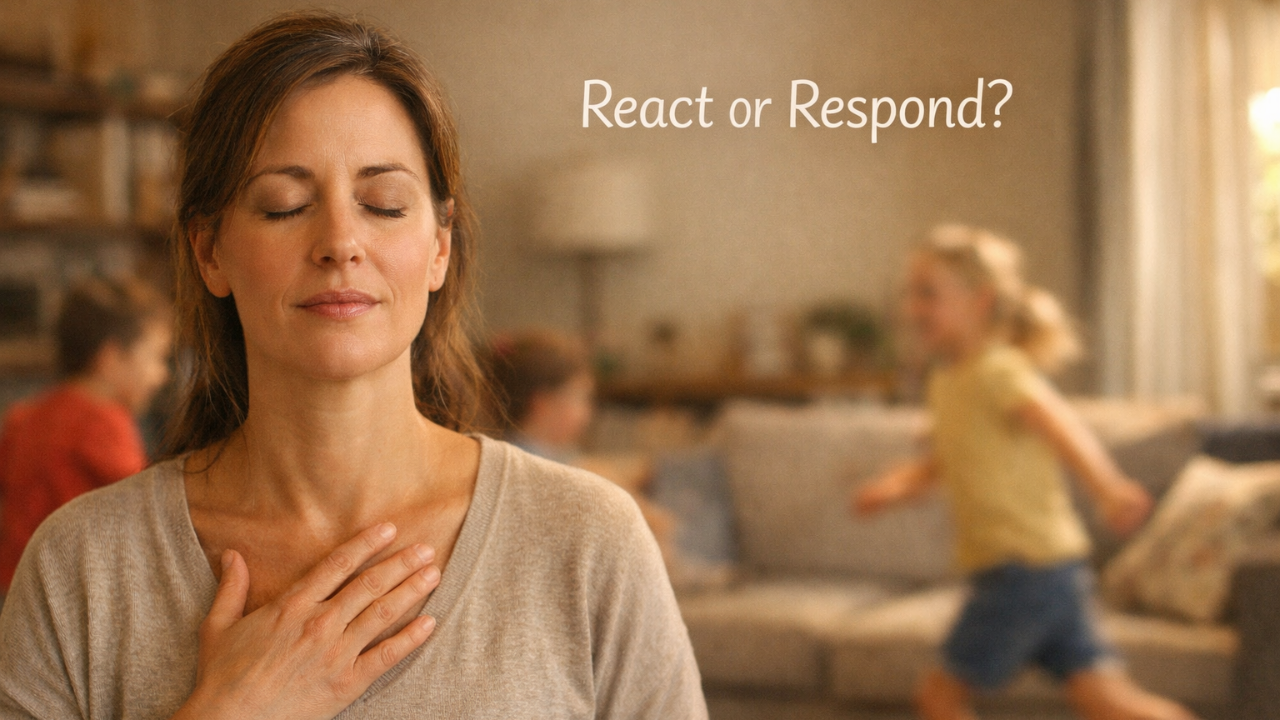
Do you tend to react or respond as a parent?
In last week’s article, I shared how much of our kids’ behavior is caught, not taught. They don’t just learn from what we say. They absorb how we handle stress, frustration, and disappointment in real life.
One of the clearest places this shows up is when things don’t go the way we expect.
In those moments, do we react…
or do we respond?
At first glance, it might sound like splitting hairs. But neurologically and emotionally, the difference is enormous.
What It Means to React
A reaction is fast, automatic, and emotionally driven.
Reactions come from the most primal part of the brain, and what I call the monkey brain. This part of the brain is focused on survival, not thoughtful parenting.
When the monkey brain is running the show we tend to flip to “command and demand” parenting:
- Our voice gets louder
- Our tone gets sharper
- We jump straight to control or punishment
- We act before we think
Reactions happen when our brain decides something has “gone wrong.”
When reality doesn’t match our expectations, our nervous system reads it as a threat.
And once that alarm goes off, old programs take over.
Programs shaped by:
- How we were parented
- What we learned about obedience or respect
- Our own childhood experiences with emotions
- Years of stress patterns
Please stop and take note! None of this makes you a bad parent… It makes you human.
What It Means to Respond
A response is slower, intentional, and regulated.
Responding comes from the prefrontal cortex, and what I call the wise owl brain. This part of the brain handles:
- Perspective
- Emotional regulation
- Empathy
- Problem-solving
- Flexible thinking
When the wise owl brain is online, we can pause.
We can think about what’s underneath the behavior.
We can choose how we want to show up.
Responding does not mean permissive parenting.
It does not mean ignoring behavior.
And it does not mean staying calm all the time.
It means acting with intention instead of impulse.
Why Most Parents React More Than They Respond
Here’s the key piece: When something doesn’t go the way we expect, our brain automatically shifts into survival mode.
A child refusing, melting down, talking back, or ignoring directions can trigger the same stress response as a real threat, especially when we’re already tired or overwhelmed.
That’s why reacting feels instant.
And responding feels hard.
It’s not a character flaw.
It’s neuroscience.
Why This Isn’t Splitting Hairs
The outcomes of reacting versus responding are worlds apart.
Reactions often lead to:
- Escalation
- Power struggles
- Shame
- Disconnection
- Regret
Responses create space for:
- De-escalation
- Learning
- Skill-building
- Emotional safety
- Repair and connection
And here’s the connection back to caught, not taught:
When parents react, kids catch reactivity.
When parents respond, kids learn regulation.
Awareness Is the First Shift
The goal isn’t to never react again.
That’s not realistic and you will be setting yourself up for failure.
The real change happens when you start to notice:
- When your monkey brain takes over
- What triggers it
- What it feels like in your body
Because awareness creates choice.
Sometimes that choice is just one breath.
One pause.
One softer response than last time.
And that’s enough to start changing the pattern.
A Question Worth Carrying With You
The next time your child’s behavior catches you off guard, try asking:
“Am I reacting right now… or am I responding?”
That single question can change the entire moment.
Not because it magically fixes behavior, but because it brings your wise owl brain back online.
And when parents shift from reacting to responding, kids don’t just behave differently… They learn differently.
If this article resonated with you, you’re not alone… and you don’t have to figure this out on your own! I invite you to join my Confident Parenting Free Email Community, where I share weekly tools to help you stay grounded in tough moments, build real parenting skills (not just strategies), and feel more confident in how you show up for your kids. You’ll also get first access to workshops and resources designed to support parents just like you. Click here to join.
Join the Confident Parenting Community.
Receive the latest tips and tools from the Confident Parenting Toolbox to support your kids
(and yourself!) with today's challenges so your whole family can thrive.
We hate SPAM. We will never sell your information, for any reason.
