
Why Boredom Is Actually Good For Your Kids And What To Do
Jun 07, 2026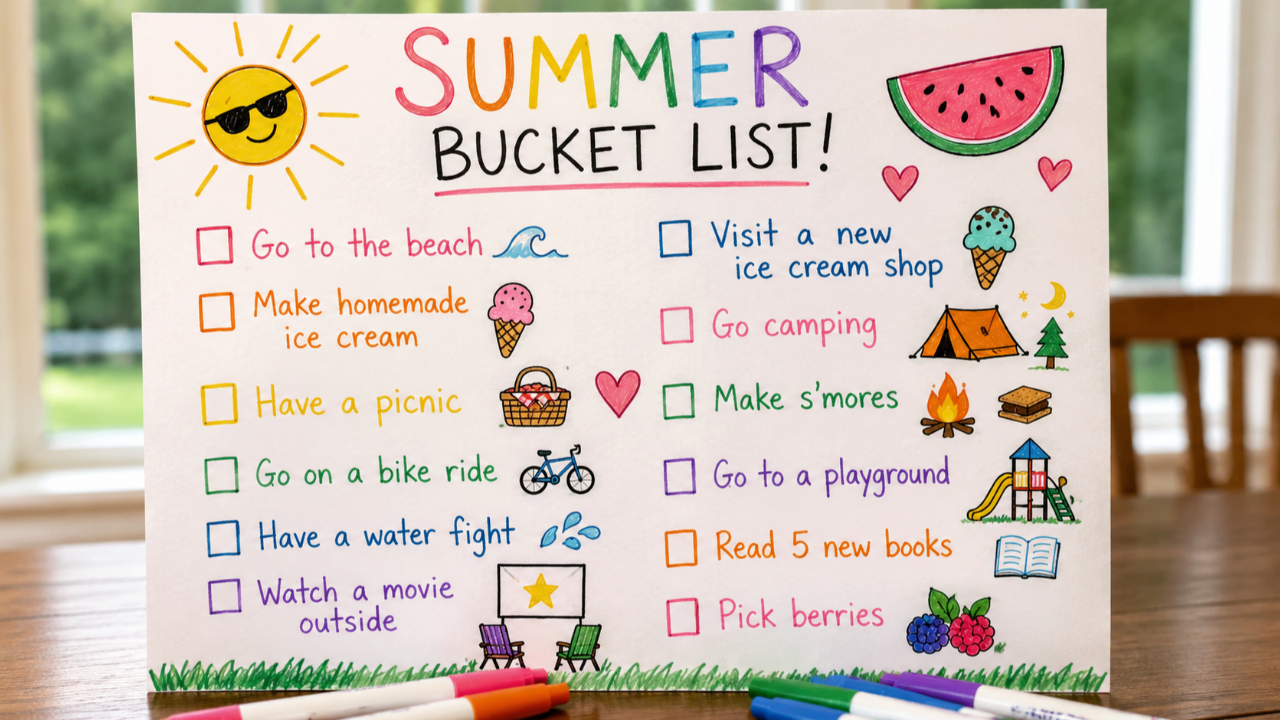
“I’m bored!”
If you’re a parent, there’s a good chance you hear this phrase much more often during the summer.
And honestly, if you're like me, you immediately feel pressure to solve it.
We start brainstorming activities.
Suggesting crafts.
Planning outings.
Offering screens.
Trying to keep everyone entertained and happy.
But what if boredom isn’t actually a problem?
What if boredom is something kids genuinely need sometimes?
Kids Today Rarely Experience True Boredom
We are raising children in a world filled with constant stimulation.
At almost any moment, kids can instantly access:
- videos
- games
- shows
- music
- social media
- texting
- endless entertainment
As a result, many kids have very little practice simply sitting in an under-stimulated state.
The moment boredom appears, something immediately fills the space.
And while that may make life easier in the short term, it can also make it harder for kids to develop important internal skills over time.
Boredom Builds Important Skills
One of the biggest misconceptions about boredom is that it means something is wrong.
But boredom is often the space where important development happens.
When kids are not constantly entertained, they begin learning how to:
- create
- imagine
- problem solve
- tolerate frustration
- develop independence
- entertain themselves
- explore interests
- build internal motivation
The challenge is that creativity often comes AFTER boredom, not before it.
There is usually an uncomfortable middle stage first.
And many kids never stay in that stage long enough to move into imagination and creativity because screens quickly remove the discomfort.
Boredom Helps Build Frustration Tolerance
This is especially important for strong-willed kids, anxious kids, kids with ADHD tendencies, and kids with big feelings.
Many of these children naturally struggle more with:
- waiting
- frustration
- delayed gratification
- discomfort
- under-stimulation
And screens provide immediate relief from all of those feelings.
But learning how to tolerate boredom is actually an important life skill.
Because real life is not constantly stimulating.
There will always be moments in life that feel:
- slow
- repetitive
- frustrating
- uncomfortable
- unstimulating
Part of emotional development is learning how to move through those moments without immediately escaping them.
Boredom Often Leads to the Best Summer Moments
One thing many parents notice is that after kids complain about being bored for a while, something interesting eventually happens.
They:
- build forts
- create games
- ride bikes
- make up stories
- draw
- invent obstacle courses
- start imaginary play
- reconnect with siblings
- head outside
- discover new interests
But this usually doesn’t happen immediately.
There’s often a messy middle first.
And many parents understandably struggle to tolerate that part.
A Personal Example: Turning a Boring Afternoon into a Summer Win
One summer, I tried this with my own daughter. After telling me she was bored, she expected me to come up with something for her to do. Instead, I handed her a poster board and some markers and asked her to make a list of summer activities she was excited about.
Not only did it keep her busy for the afternoon, but she came up with some genuinely fun ideas. One of them was taking a weekly family trip to a different local ice cream shop.
That simple suggestion ended up becoming one of our favorite summer traditions. More importantly, it gave her a sense of ownership and pride because the idea came from her.
It was a great reminder that kids often have wonderful ideas once they move through that initial discomfort of boredom.
Parents Don’t Need to Entertain Kids All Day
I think many parents carry tremendous pressure during summer.
We feel like we should:
- make summer magical
- constantly create activities
- prevent boredom
- keep everyone happy
- make every moment productive
That’s exhausting.
Kids do not need parents who entertain them nonstop.
What they often need most is:
- connection
- some structure
- emotional safety
- opportunities for free play
- time outside
- room for creativity
- space to figure things out
Some boredom is healthy.
In fact, many adults can probably remember some of their most creative and memorable childhood moments happening during long stretches of unstructured summer time.
This Doesn’t Mean Kids Should Never Have Screens
This conversation is not about eliminating screens completely.
Screens are part of modern life.
And honestly, sometimes parents need the break.
But when screens become the automatic solution to every moment of boredom, kids lose opportunities to develop the internal skills that boredom helps build.
That’s why I encourage parents to think about balance instead of perfection.
Sometimes it’s okay for kids to sit in the discomfort of:
“I don’t know what to do.”
Because very often, something important comes next.
How to Handle “I’m Bored”
When kids say: “I’m bored!”
Try not to panic or immediately solve the problem for them.
Instead, you might respond with:
- “I wonder what you’ll come up with.”
- “Sometimes boredom helps us get creative.”
- “That’s okay. You’ll figure something out.”
- “You don’t have to love being bored.”
- “I believe your brain will come up with an idea.”
This helps shift the responsibility back to the child instead of teaching them that someone else must immediately remove their discomfort.
That doesn’t mean you can’t occasionally help brainstorm ideas.
Of course you can.
But try to resist becoming your child’s full-time entertainment director.
Give Yourself Grace
Summer can feel long.
There will be days where your kids are beautifully creative and independent.
And there will be days where everyone complains, watches too much TV, argues with siblings, and drives each other crazy.
That’s normal too.
The goal is not creating a perfect, screen-free summer.
The goal is helping kids build balance, independence, creativity, and the ability to tolerate discomfort without constantly escaping it.
And boredom can actually play an important role in helping kids develop those skills.
If you’re looking for help creating more structure, balance, and intentionality this summer, I created a free Summer Planning Kit to help parents think through routines, screen time, activities, expectations, and ways to create a summer that feels calmer and more connected.
You can download the free Summer Planning Kit here:
If you’d like more support around strong-willed behavior, screens, emotional regulation, and parenting tools, you can also join my Confident Parenting Email Community here.
You don’t have to figure this all out perfectly. Most of us are learning as we go.
Join the Confident Parenting Community.
Receive the latest tips and tools from the Confident Parenting Toolbox to support your kids
(and yourself!) with today's challenges so your whole family can thrive.
We hate SPAM. We will never sell your information, for any reason.
