
Why Kids Get More Emotional at the End of the School Year (And What Helps)
May 30, 2026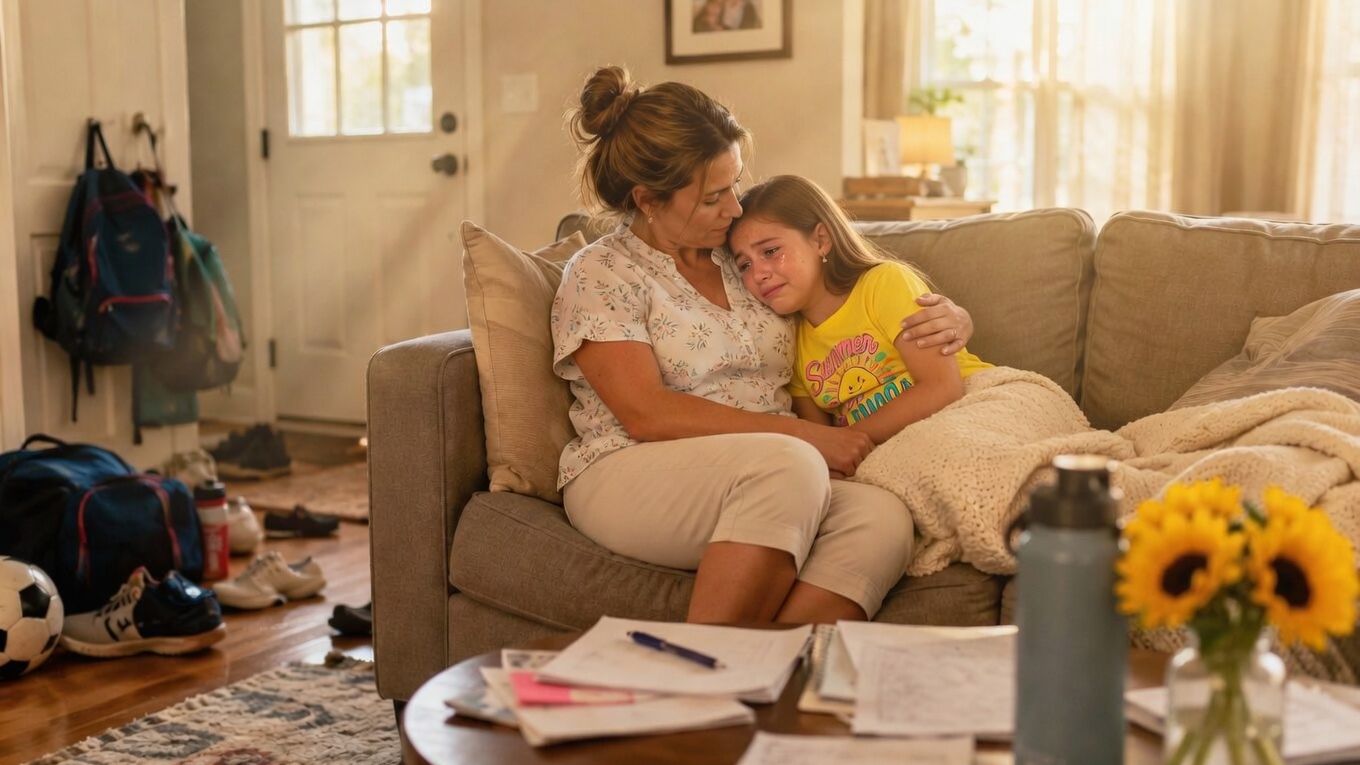
Is your house feeling a little more emotional lately?
More meltdowns.
More arguing.
More sensitivity.
More resistance over things that normally wouldn’t be a big deal.
At the same time, parents are trying to juggle field days, concerts, playoffs, recitals, spirit weeks, awards ceremonies, graduation events, end of year projects, teacher gifts, changing schedules, and the mental load of preparing for summer.
This time of year can feel like A LOT for everyone.
And what many parents don’t realize is that there’s actually a nervous system reason why behavior often gets harder at the end of the school year.
Because even positive change is still change.
When our brains know a transition is coming, our nervous systems naturally start preparing for it. Kids may not consciously realize they’re doing this, but internally they often begin feeling less settled and more emotionally sensitive.
Their routines are changing.
Their structure is changing.
Their teachers may be changing.
Friends may be moving.
Schedules are shifting.
Expectations are different.
There are more events, more stimulation, more uncertainty, and often less downtime.
Even kids who are excited for summer can still feel emotionally dysregulated by all of the transition happening around them.
And when nervous systems become overloaded, behavior is usually the first thing parents notice.
That can look like:
- more irritability
- bigger reactions
- difficulty listening
- increased clinginess
- emotional outbursts
- trouble sleeping
- more conflict between siblings
- pushing back against limits
- more tears over small things
- increased screen battles
- seeming “wild” or extra hyper
This doesn’t mean your child is being difficult on purpose.
It often means their nervous system is working overtime.
At the exact same time, many parents are also operating in overwhelm themselves.
Your brain may be spinning with thoughts like:
- There’s too much going on
- I can’t keep up
- I’m forgetting things
- We’re so busy
- I don’t know how I’m going to manage summer
- I just need everyone to cooperate
And when both kids and parents are running on overloaded nervous systems, everyone becomes more reactive.
That’s why this time of year often feels harder than parents expect.
The good news is that you do not need to handle this perfectly.
What helps most during seasons like this is lowering the emotional temperature in the home and supporting everyone’s nervous systems as much as possible.
Here are a few things that can make a big difference:
1. Expect More Emotionality
Sometimes the biggest shift is simply understanding what’s happening.
When parents realize:
“My child’s nervous system is overloaded right now,”
they often stop taking behaviors so personally.
That mindset shift alone can help you respond more calmly.
2. Protect Downtime
Kids are often running from school directly into activities, practices, events, and late nights this time of year.
Even highly social or active kids still need quiet decompression time.
That might look like:
- outside play
- reading
- drawing
- swinging
- listening to music
- snuggling on the couch
- time without demands
Not every moment needs to be productive.
3. Keep Some Predictability
Even when schedules get busy, maintaining a few predictable anchors can help nervous systems feel safer.
Simple things like:
- consistent bedtime routines
- regular meals
- quiet connection time
- predictable screen limits
- knowing what the next day looks like
can help kids feel more regulated during transitions.
4. Regulate Yourself First
Parents often try to solve behavior first.
But nervous systems respond to nervous systems.
If you’re feeling overwhelmed, anxious, or frantic, your child will often absorb that energy even if you aren’t saying anything out loud.
Sometimes the most powerful thing you can do is pause for a moment and calm your own body first.
One of my favorite tools is putting my hand on my heart and taking a slow deep breath before responding.
Not because everything magically changes in that moment, but because a calmer nervous system helps you access the part of your brain that thinks clearly and responds intentionally instead of reacting automatically.
5. Remember: This Is a Season
The end of the school year can feel incredibly intense while you’re in it.
But it’s temporary.
You do not have to create a perfect summer.
You do not have to attend every event flawlessly.
You do not have to make every moment magical.
Sometimes the goal is simply: support everyone’s nervous systems, stay connected, and make the most of the season you’re in.
That is more than enough.
If your child has been extra emotional lately, you are not alone.
And if you’ve been feeling overwhelmed too, that makes complete sense.
Transitions are hard on nervous systems… for kids and adults alike.
The goal isn’t perfection during busy seasons like this.
The goal is calm leadership, realistic expectations, and remembering that behavior often makes a lot more sense once we understand what’s happening underneath it.
If you’re already thinking ahead about how to create a summer with less screen conflict, more structure, and fewer daily battles, I created a free Summer Planning Kit to help parents think through routines, screen time, activities, expectations, and ways to create a summer that feels calmer and more connected. You can download the free Summer Planning Kit here: https://www.melpeirce.com/summerplanningkit
Join the Confident Parenting Community.
Receive the latest tips and tools from the Confident Parenting Toolbox to support your kids
(and yourself!) with today's challenges so your whole family can thrive.
We hate SPAM. We will never sell your information, for any reason.
